VCE · Topic explainer
Organic reaction pathways in VCE Chemistry
An organic reaction pathway shows how a starting compound becomes a product through one or more reactions. Read each arrow as a change in functional group. Identify the reagent or conditions, draw the intermediate, and check whether the carbon skeleton is meant to stay the same.
Worked example
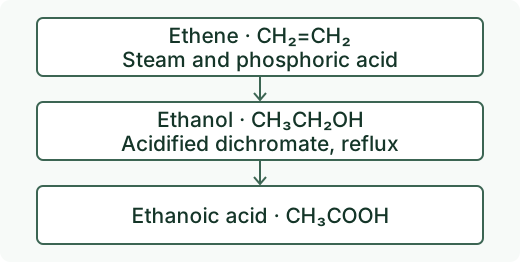
Plan a route from ethene to ethanoic acid. Hydration adds water across the carbon–carbon double bond to give ethanol. Acid-catalysed hydration uses steam and a phosphoric acid catalyst.
Ethanol is a primary alcohol. Heat it under reflux with excess acidified potassium dichromate to oxidise it to ethanoic acid. The carbon skeleton still has two carbons. Track the change from alkene to alcohol to carboxylic acid.
Official exam practice
Find other years and marking guidance in the Chemistry official exam archive.