HSC · Topic explainer
Combining an annuity with an initial lump sum
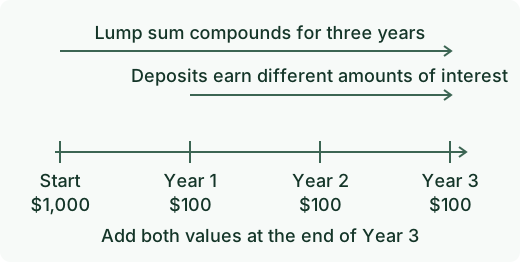
When an investment starts with a lump sum and receives equal end-of-period deposits, calculate the future value of the lump sum and of the deposit stream separately. Add the results at the same ending date. Match the interest rate and period count to the timing of the payments.
Worked example
Invest $1,000 now and deposit $100 at the end of each year for three years at 5% per year. At the end of year three the lump sum is worth $1,000 × 1.05³ = $1,157.625 before rounding.
The three deposits are worth $100 × (1.05² + 1.05 + 1) = $315.25. The last deposit earns no interest because it arrives on the ending date. Add the two components and round the total to $1,472.88.
Official exam practice
Find other years and marking guidance in the Mathematics Standard 2 official exam archive.