HSC · Topic explainer
Using a precipitate to measure sulfate by mass
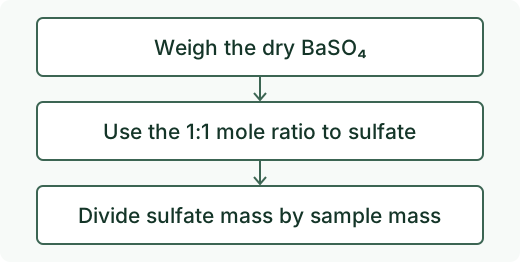
Gravimetric analysis uses a measured mass to determine the amount of an analyte. For sulfate, a known precipitation reaction can convert dissolved sulfate into barium sulfate. Determine the moles of the dry precipitate, use the balanced mole ratio, then express sulfate mass as a percentage of the original sample.
Worked example
A 2.00 g sample produces 0.233 g of dry BaSO₄. Using a molar mass of about 233 g/mol gives 0.00100 mol of precipitate. The 1:1 mole ratio gives the same amount of sulfate.
Multiply 0.00100 mol by 96.1 g/mol to obtain about 0.0961 g sulfate, or 4.81% by mass in the sample. An undried solid can make the result too high, while incomplete precipitation can make it too low.
Official exam practice
Find other years and marking guidance in the Chemistry official exam archive.