HSC · Topic explainer
Comparing acid strength using pKa
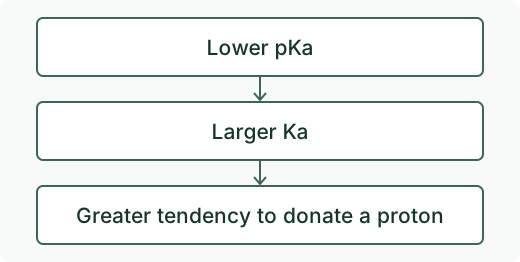
A smaller pKa means a larger acid dissociation constant and a stronger acid under the same conditions. A one-unit pKa difference represents a tenfold difference in Ka. To explain a trend in related acids, compare the stability of the conjugate bases after they lose a proton.
Worked example
Acid A has pKa 3.2 and acid B has pKa 4.2. Since Ka = 10⁻ᵖᴷᵃ, acid A has ten times the Ka of acid B. A can donate its proton more readily.
An electron-withdrawing group close to a carboxyl group can stabilise the negative conjugate base through the inductive effect. Compare both the strength of electron withdrawal and its distance from the charged group when explaining differences.
Official exam practice
Find other years and marking guidance in the Chemistry official exam archive.