HSC · Topic explainer
Mitosis and meiosis in HSC Biology
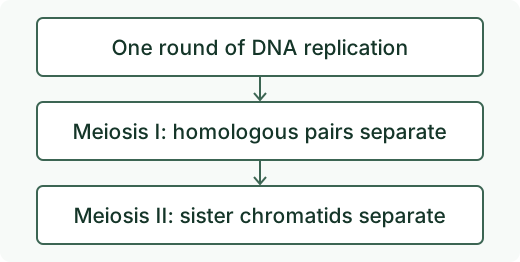
Mitosis separates sister chromatids in one division and maintains chromosome number. Meiosis follows one round of DNA replication with two divisions. Homologous chromosomes separate in meiosis I, and sister chromatids separate in meiosis II. Crossing over and independent assortment can increase genetic variation among the products of meiosis.
Worked example
Start with a diploid cell that has two homologous pairs, so 2n = 4. Replication gives each chromosome two chromatids. The cell still has four chromosomes because each pair of chromatids is joined at one centromere.
After meiosis I, each daughter cell has two chromosomes that are still duplicated. After meiosis II, each final cell has two single-chromatid chromosomes. In mitosis, chromatids separate in the only division, leaving two cells with four chromosomes each.
Official exam practice
Find other years and marking guidance in the Biology official exam archive.
Further reading. NESA 2025 Biology marking feedback