HSC · Topic explainer
How to evaluate an epidemiological study
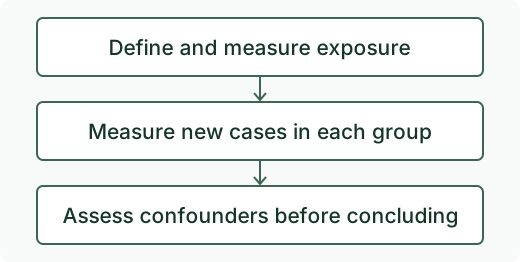
Epidemiology studies how health outcomes are distributed in populations and what factors might affect them. A cohort study can compare outcomes over time between groups with different exposures. Look for consistent measurement and plausible confounders before interpreting the result. An observed association can support further investigation into causation.
Worked example
Suppose researchers follow workers with different levels of dust exposure and record new cases of a respiratory condition. Use the same diagnostic criteria in both groups. A standard method helps make measurements consistent and comparable.
If smoking is more common in the more exposed group and also affects the outcome, it could confound the association. Collect smoking histories in both groups and account for them when comparing incidence. Explain how that design choice improves the validity of the comparison.
Official exam practice
Find other years and marking guidance in the Biology official exam archive.
Further reading. NESA 2025 Biology marking feedback