HSC · Topic explainer
Calculating carrier probability for an unaffected child
For two heterozygous parents in a simple autosomal recessive model, an unaffected child can have genotype AA or Aa. With complete penetrance, the aa outcome is excluded. To find the probability that an unaffected child is a carrier, divide the probability of Aa by the total probability of being unaffected.
Worked example
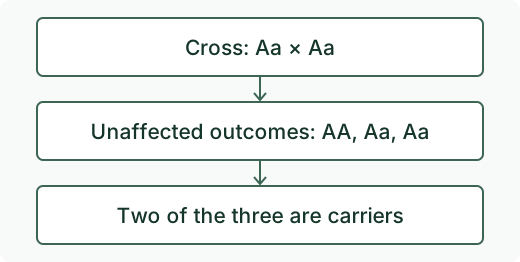
Write the cross Aa × Aa. The four equally likely outcomes are AA, Aa, Aa and aa. Two of the four are carriers before any information about the child is known.
If the child is known to be unaffected, remove aa. Two of the three remaining outcomes are carriers, so the conditional probability is 2/3. This assumes the genotype accurately predicts the trait and that the parent genotypes are known.
Official exam practice
Find other years and marking guidance in the Biology official exam archive.