HSC · Topic explainer
What is an antigen in HSC Biology?
An antigen is a molecule or molecular structure that the adaptive immune system can recognise. Antibodies and B-cell receptors can bind specific regions called epitopes. T cells typically recognise antigen fragments displayed by other cells. A pathogen can carry many antigens, and antigen recognition can help trigger a targeted immune response.
Worked example
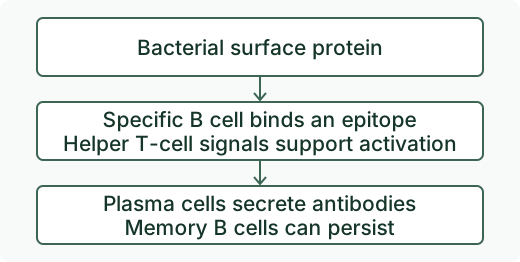
Imagine a bacterium with a distinctive surface protein. A B cell whose receptor fits part of that protein can bind it. With appropriate helper T-cell signals, the B cell can multiply and differentiate.
Some of the resulting cells become plasma cells and secrete antibodies with the same specificity. Others become memory B cells. In an exam response, name the antigen, identify which cell recognises it and explain how that recognition leads to a specific response.
Official exam practice
Find other years and marking guidance in the Biology official exam archive.