VCE · Topic explainer
How yeast fermentation makes ethanol in VCE Biology
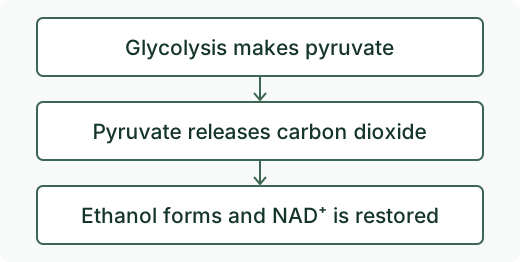
When oxygen is limited, yeast can ferment sugars to make ethanol and carbon dioxide. Glycolysis splits glucose into pyruvate. The reactions that convert pyruvate to ethanol regenerate NAD⁺, which glycolysis needs to continue. Glycolysis provides a net two ATP per glucose under these conditions.
Worked example
In a low-oxygen flask, yeast supplied with glucose releases carbon dioxide. To compare temperatures, keep the yeast strain, starting glucose concentration and volumes the same. Measure the change in carbon dioxide volume over the same time interval.
Carbon dioxide production is an indicator of fermentation rate when oxygen and other conditions are controlled. If the question asks for the amount of ethanol produced, explain how you would measure ethanol directly. One gas reading alone cannot establish the final ethanol concentration.
Official exam practice
Find other years and marking guidance in the Biology official exam archive.
Further reading. VCAA Biology teaching and learning support