HSC · Topic explainer
What is the standard of living in economics?
Standard of living describes people’s material circumstances and the conditions that affect how well they live. Real GDP per person is a common proxy for average material living standards. Broader indicators cover outcomes such as health, security and the environment. An average also leaves open how gains are shared across households.
Worked example
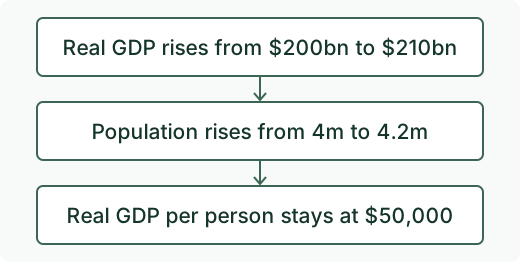
In a hypothetical economy, real output rises from $200 billion to $210 billion while the population rises from 4 million to 4.2 million. Divide output by population in each period. Both results are $50,000 per person in constant prices.
Total output grew, but this material proxy stayed flat. To judge living standards more broadly, check measures such as median household income and access to healthcare. These can move differently from real output per person.
Official exam practice
Find other years and marking guidance in the Economics official exam archive.
Further reading. Australian Bureau of Statistics, Measuring What Matters