HSC · Topic explainer
How a weaker Australian dollar affects import costs
When the Australian dollar depreciates against the currency used to price an import, buying that import generally costs more in Australian dollars. Separate the change in the exchange rate from any change in the foreign price. The domestic price effect depends on hedging, contracts and how much of the higher cost a seller passes through.
Worked example
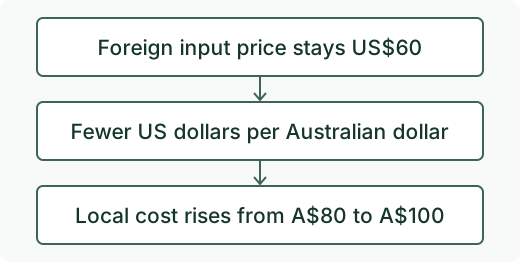
An Australian importer buys an input priced at US$60. At US$0.75 per A$1, the input costs A$80. At US$0.60 per A$1, the same US$60 costs A$100.
The extra A$20 can reduce the importer’s margin or increase the price it charges. An Australian firm competing against imports may gain a price advantage. Its own imported input costs still matter, so identify the firm’s exposure before judging the net effect.
Official exam practice
Find other years and marking guidance in the Economics official exam archive.
Further reading. NESA 2025 Economics marking feedback